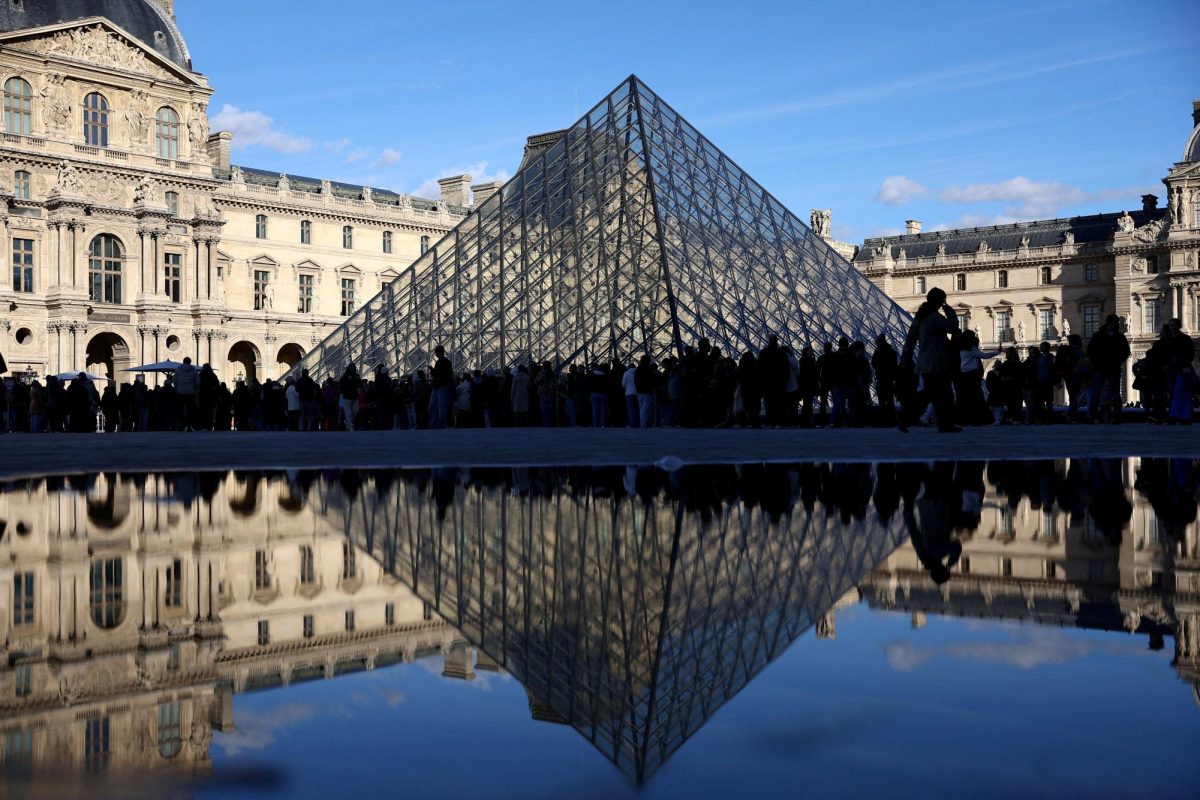
On Sunday, October 19, 2025, the Louvre Museum, in Paris, France, erupted into chaos during a daytime robbery in which eight historic pieces from the French crown jewelry collection were taken.
The heist occurred around 9:30 a.m., shortly after the museum opened. The thieves used a basket lift, also known as a cherry picker, to reach a window on the side of the building overlooking the Seine River. As these basket lifts are commonly used by construction workers, the thieves appeared unsuspicious, which allowed them to cut through the window to access the Galerie d’Apollon (Apollo Gallery), where they smashed two display cases. The entire operation itself was quick and simple—officials say it lasted around 4 minutes, yet some media reports claim up to 7 minutes. After exiting the museum, the thieves fled on motor scooters.
According to the French Ministry of Culture, eight items were stolen, including emerald and sapphire tiaras, necklaces, a brooch, earrings, and more. Many of these pieces belonged to the French ruler Napoleon I and the family of Napoleon III. For example, an emerald and diamond necklace from Empress Marie-Louise’s set and sapphire jewelry from Queen Marie-Amélie and Queen Hortense were stolen. In addition, Empress Eugénie’s crown, filled with many diamonds and emeralds, was recovered nearby. However, the crown was reportedly broken when the thieves dropped it. Authorities describe the stolen pieces as having “immeasurable heritage value” beyond just their worth of approximately $100 million.
The robbery prompted an immediate closing and evacuation of the museum. Forensic teams collected evidence, and CCTV footage went under review. French officials have expressed serious concern over security lapses. Culture Minister Rachida Dati called the operation “very professional” since the robbers entered calmly and used zero violence. According to a preliminary government report, the Louvre had “chronic, structural underestimation” of intruder risk, with out-of-date protocols and weak coverage in some areas.
Although the Louvre had seen heists before, this was the first one in over two decades. One of the most famous incidents was the 1911 theft of the Mona Lisa, stolen by Vincenzo Peruggia. Similarly, in 1998, a valuable Corot painting, titled Le Chemin de Sèvres, was stolen during museum hours and was never recovered.
Overall, the Louvre heist was a fast, highly organized robbery that exposed major security flaws at one of the world’s most famous museums. The robbery was straight out of a movie scene: thieves stole several culturally significant crown jewels and escaped within minutes. This robbery prompted a major investigation and, most importantly, raised questions about how well-equipped museums are to protect priceless historical artifacts.
On Sunday, October 19, 2025, the Louvre Museum, in Paris, France, erupted into chaos during a daytime robbery in which eight historic pieces from the French crown jewelry collection were taken.
The heist occurred around 9:30 a.m., shortly after the museum opened. The thieves used a basket lift, also known as a cherry picker, to reach a window on the side of the building overlooking the Seine River. As these basket lifts are commonly used by construction workers, the thieves appeared unsuspicious, which allowed them to cut through the window to access the Galerie d’Apollon (Apollo Gallery), where they smashed two display cases. The entire operation itself was quick and simple—officials say it lasted around 4 minutes, yet some media reports claim up to 7 minutes. After exiting the museum, the thieves fled on motor scooters.
According to the French Ministry of Culture, eight items were stolen, including emerald and sapphire tiaras, necklaces, a brooch, earrings, and more. Many of these pieces belonged to the French ruler Napoleon I and the family of Napoleon III. For example, an emerald and diamond necklace from Empress Marie-Louise’s set and sapphire jewelry from Queen Marie-Amélie and Queen Hortense were stolen. In addition, Empress Eugénie’s crown, filled with many diamonds and emeralds, was recovered nearby. However, the crown was reportedly broken when the thieves dropped it. Authorities describe the stolen pieces as having “immeasurable heritage value” beyond just their worth of approximately $100 million.
The robbery prompted an immediate closing and evacuation of the museum. Forensic teams collected evidence, and CCTV footage went under review. French officials have expressed serious concern over security lapses. Culture Minister Rachida Dati called the operation “very professional” since the robbers entered calmly and used zero violence. According to a preliminary government report, the Louvre had “chronic, structural underestimation” of intruder risk, with out-of-date protocols and weak coverage in some areas.
Although the Louvre had seen heists before, this was the first one in over two decades. One of the most famous incidents was the 1911 theft of the Mona Lisa, stolen by Vincenzo Peruggia. Similarly, in 1998, a valuable Corot painting, titled Le Chemin de Sèvres, was stolen during museum hours and was never recovered.
Overall, the Louvre heist was a fast, highly organized robbery that exposed major security flaws at one of the world’s most famous museums. The robbery was straight out of a movie scene: thieves stole several culturally significant crown jewels and escaped within minutes. This robbery prompted a major investigation and, most importantly, raised questions about how well-equipped museums are to protect priceless historical artifacts.